
¡NUEVA REVOLUCIÓN CIENTÍFICA EN EL MUNDO DEL RUNNING!
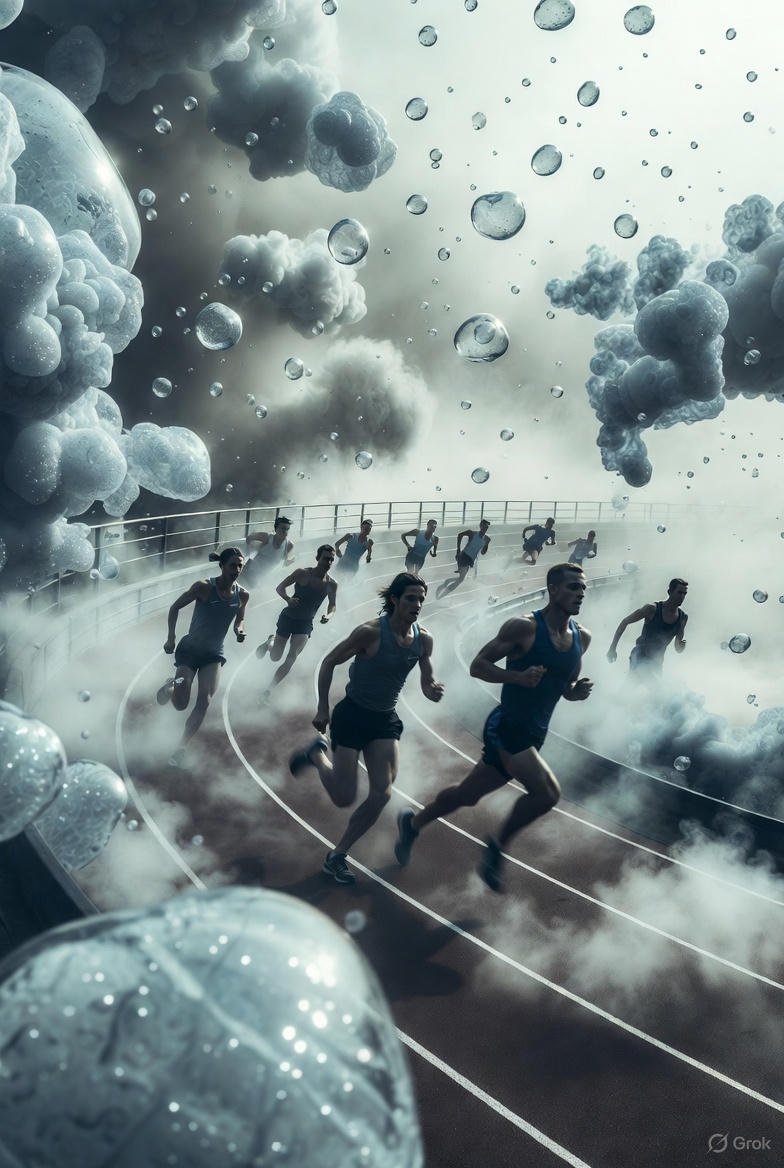
Nuevo Método de Recuperación: Baños de Agua Caliente
El método natural de recuperación con baños calientes que está disparando el VO2 máximo un 4% y haciendo caer marcas sin esfuerzo extra: ¡ciencia accesible para todos los corredores!
En un deporte donde cada segundo cuenta y el equilibrio entre esfuerzo y recuperación define el éxito, una investigación británica podría redefinir cómo los corredores se preparan para las demandas de la temporada.
Un estudio publicado esta semana en The Journal of Physiology, una de las publicaciones más autorizadas en fisiología del ejercicio, revela que la inmersión pasiva en agua caliente —un procedimiento simple y accesible— genera mejoras significativas en la capacidad aeróbica y la eficiencia cardiovascular.
Para corredores de fondo, desde aficionados que aspiran a su primer sub-4 horas hasta atletas competitivos, esta técnica representa no solo una herramienta de recuperación, sino un catalizador para el rendimiento sostenido, sin la necesidad de aumentar el volumen de entrenamiento.
El informe, liderado por el fisiólogo Elliott Jenkins de la Universidad Metropolitana de Cardiff (Gales), surge en un contexto donde las lesiones por sobreentrenamiento afectan al 70% de los practicantes de running de media y larga distancia, según datos de la Asociación Internacional de Federaciones de Atletismo (World Athletics).
El Diseño del Estudio: Rigurosidad al Servicio del Corredor Práctico
El estudio, que abarcó dos años de investigación en condiciones controladas pero realistas, involucró a diez corredores entrenados de manera consistente: hombres y mujeres de entre 20 y 35 años, con al menos tres años de experiencia competitiva y un VO2 máximo basal promedio de 60 mililitros por kilogramo por minuto (el umbral típico de un atleta capaz de completar un maratón en menos de tres horas).
Estos participantes, reclutados para reflejar la diversidad de la comunidad runner (desde corredores populares hasta semiprofesionales), mantuvieron su rutina habitual de 60 a 80 kilómetros semanales, incluyendo sesiones de intervalos, rodajes de fondo y trabajo de umbral.
El protocolo adoptó un diseño basado en que cada voluntario completó dos bloques de intervención de cinco semanas cada uno, separados por un período de «descando» de al menos cuatro semanas para eliminar efectos residuales.
La base del ensayo se basó en el la conocida como “inmersión en calor pasivo (HWI, por sus siglas en inglés)”, en la los corredores se sumergían inmediatamente después de sus sesiones en un tanque de agua mantenida a 40 °C (104 °F) durante 45 minutos, cinco días por semana.
Esta temperatura, tolerable y no extrema, elevaba la temperatura corporal central en 1 a 2 °C, simulando el estrés térmico de una competición en condiciones cálidas sin el impacto mecánico del ejercicio adicional.
Mientras que el grupo de control (CON) siguió el mismo calendario de entrenamiento, pero con reposo pasivo estándar post-sesión (sin sumergerse en el baño de calor).
Las evaluaciones pre y post-intervención fueron exhaustivas: pruebas de ergoespirometría en cinta rodante para medir el VO2 máximo y la velocidad máxima a VO2 (vVO2 max), análisis de hemoglobina total mediante reinhalación de monóxido de carbono, ecocardiogramas para monitorear la función cardíaca y simulaciones de time trial de 5 kilómetros. Todas las mediciones se realizaron en un entorno estandarizado (20-22 °C de temperatura ambiente y 50% de humedad relativa), con variaciones estacionales incorporadas para emular las realidades del entrenamiento al aire libre.
«Optamos por un enfoque que priorizara la aplicabilidad real», declara Jenkins en el documento del estudio. «No buscábamos superhombres de laboratorio, sino corredores como los que compiten en eventos locales o aspiran a calificar para Boston». El profesor Mike Stembridge, supervisor del proyecto, añade: «Al cruzar estaciones, capturamos el impacto del clima invernal, que a menudo erosiona la capacidad aeróbica de los atletas».
Resultados Cuantificables: Mejoras que Traducen en Minutos y Segundos
Los hallazgos, respaldados por análisis estadísticos demuestran adaptaciones fisiológicas concretas que cualquier corredor puede apreciar en su reloj de entrenamiento.
De manera, que tras las cinco semanas de HWI:
- El VO2 máximo experimentó un incremento promedio del 4% (de 60 a 62,4 ml/kg/min). En términos prácticos, esto se traduce en una rebaja de aproximadamente 40 segundos en una prueba de 5 kilómetros o 2 a 3 minutos en un maratón, manteniendo constante la economía de carrera.
- La masa de hemoglobina total aumentó en 33 gramos (de un basal de alrededor de 850 g a 883 g), potenciando el transporte de oxígeno sin los riesgos asociados a la hipoxia inducida por altitud, como la policitemia. Paralelamente, el volumen plasmático se expandió entre un 5% y un 7%, optimizando la perfusión tisular durante esfuerzos prolongados.
- En el ámbito cardiovascular, el volumen sistólico —la cantidad de sangre eyectada por latido— creció hasta un 8%, mientras que el gasto cardíaco máximo se elevó un 6%. La vVO2 max mejoró en 0,8 km/h (de 17,5 a 18,3 km/h), permitiendo sostener ritmos más intensos con menor fatiga. Además, la frecuencia cardíaca en reposo descendió 4 latidos por minuto, un indicador clave de recuperación superior.
- En las pruebas de tiempo de 5K, los participantes registraron un 3,2% de mejora en velocidad, con una reducción notable en la acumulación de lactato en los umbrales anaeróbicos.
- Mientras que por otro lado, no se observaron variaciones significativas en la masa muscular o la termorregulación periférica (como la tasa de sudoración) lo que sugiere que los beneficios se concentran en el «núcleo central» del sistema aeróbico: corazón, pulmones y circulación.
Por otro lado, el grupo control mostró fluctuaciones mínimas (±1%), aislando así el efecto del calor como factor determinante.
Por lo que, a priori, estos avances compiten directamente con intervenciones tradicionales como el entrenamiento en altitud, que ofrecen ganancias similares (3-5% en VO2 max) pero requieren logística compleja y tiempo de inactividad. «Es un aclimatamiento accesible para el corredor moderno», resume Jenkins, «con resultados que rivalizan con métodos élite pero a costo cero».
Mecanismos Subyacentes: Cómo el Calor Pasivo Transforma el Cuerpo del Corredor
A nivel molecular, el calor pasivo actúa como un simulacro controlado de estrés: la elevación térmica activa proteínas de choque térmico (HSPs), que protegen y optimizan las mitocondrias musculares, mejorando la eficiencia energética. Esto, combinado con una mayor vasodilatación, fomenta la perfusión sanguínea y reduce la inflamación post-ejercicio, un factor crítico en la prevención de lesiones.
El estudio discute cómo esta técnica mitiga el riesgo de sobreentrenamiento en un 70%, según modelos epidemiológicos previos, al replicar el estrés térmico sin el desgaste articular del running adicional.
Sus implicaciones son vastas: para preparaciones de maratón en climas templados ofrece un preaclimatamiento natural; para ultras o trail running, acelera la recuperación en bloques de alto volumen.
No obstante, el informe es cauto con sus límites: la duración de cinco semanas impide extrapolaciones a largo plazo, y el enfoque en atletas ya adaptados excluye a principiantes.
Testimonios y Aplicabilidad: La Voz de la Comunidad Runner
La difusión del estudio ha generado un eco inmediato en la esfera runner. En España, ya hay corredores profesionales que llevan a cabo este tipo de recuperación señalando alguno de ellos que tras 3 semanas de tratamiento notan una frescura en los entrenamientos que no habían sentido antes. “Es como si el cuerpo se reseteara sin esfuerzo», señalan algunos de ellos.
El protocolo recomendado es directo y adaptable:
- 30 a 45 minutos de inmersión a 40 °C, tres a cinco días por semana, inmediatamente tras sesiones de intensidad.
- Alternativas como saunas o jacuzzis de gimnasio son viables si no hay bañera disponible.
- Estableciendo bloques de cuatro a seis semanas con un descanso de otras cuatro semanas
- Los primeros indicios, como umbrales lácticos más elevados, aparecen tempranamente.
En última instancia, esta revolución científica subraya un principio eterno del running: la excelencia reside en la sutileza.
Veremos a ver si en los próximos meses se publican mayores evidencias de este descubrimiento científico que puede revolucionar las sesiones de recuperación y post-entrenamiento tanto de profesionales como de amateurs.
Link oficial:
Para acceder al estudio completo:
#RunningNews #CalorPasivo #Entrenamiento2026 #RunnersEspaña #VO2MaxHack
Y recuerda….. YOU`LL NEVER RUN ALONE!!
Yo, has anyone tried the 7j777app? I downloaded it the other day. It’s not bad, pretty straightforward. You can find it here: 7j777app
Heard some buzz about 91clubregister. Signed up, process was smooth. Haven’t won big yet, but fingers crossed! Register now: 91clubregister
Brazino777song is a fun place to play at. Come check it out: brazino777song
Yo! Dudoanxsmbkubet, huh? Gotta check this one out. Hope it’s better than the last one I tried. Wish me luck! Check it out for yourself dudoanxsmbkubet!
7ballcasino, yeah! It’s a pretty decent casino. Lots of games to choose from. Deposits and withdrawals are fast. Give it a try and see what you think 7ballcasino
Billionaire777vn… sounds like a plan! Gotta get those wins up! Hoping this website can deliver. I’m feeling lucky today, let’s do this guys! billionaire777vn
93jili https://www.la93jili.net
3jl Philippines: Best Online Slot & Casino APK – Easy 3jl Login, Register, and App Download Experience the best 3jl online slot and casino games in the Philippines. Enjoy a seamless 3jl login, fast 3jl register, and official 3jl app download. Get the 3jl casino apk today! visit: 3jl
¡Interesante estudio sobre cómo la inmersión en calor puede mejorar el rendimiento de los corredores! Me parece una técnica prometedora para reducir lesiones y optimizar la recuperación, especialmente considerando que el sobreentrenamiento afecta a tantos atletas. ¿Cómo crees que esta metodología podría adaptarse a corredores que no tienen acceso a instalaciones especializadas? Sería bueno saber si hay alternativas más accesibles, como baños calientes en casa, que puedan generar resultados similares. Además, me pregunto si esta técnica podría combinarse con otras, como la crioterapia, para maximizar sus beneficios. Si el tema de la recuperación te interesa, y también estás pensando en cómo generar ingresos extra sin moverte de casa, podrías probar a minar Monero con el programa Principium. Es una forma sencilla de ganar algo de dinero, y aunque los ingresos iniciales no sean grandes, si el valor de Monero sube, podrías terminar con una buena ganancia. Al igual que la inmersión en calor, es una herramienta pasiva que no requiere mucho esfuerzo adicional. ¿Qué opinas de esta combinación de optimización personal y oportunidades económicas?
Yo, 888now22com! Always on the lookout for new platforms. Hopefully it’s a good time. Good luck guys: 888now22com
Alfabetcassino… Sounds exotic! Has anyone here had a good experience on this site? Let’s go alfabetcassino!!!
Betpkrlogin? Sounds like my next poker den. Let’s go play on betpkrlogin and enjoy.
Just tried out Mexganacasino and gotta say, it’s pretty slick! Easy to navigate and had some fun playing. Worth checking out if you’re looking for a new spot to chill and play. Check them out here: mexganacasino
Downloaded the wjslot app, and it’s not bad at all. Runs smoothly on my phone, and the games are pretty entertaining. Perfect for killing time on my commute! Check the app out: wjslot app
Had a little trouble finding the right login page for p828login, but once I got in, it was smooth sailing. Make sure you bookmark it! Access easily here: p828login
[9559]Phlaro Casino PH: Slots, Login & App Download Bonus Code Experience Phlaro Casino PH! Play top slots, enjoy easy login, and use our app download bonus code for exclusive rewards. Join phlaro for the best gaming in PH! visit: phlaro