
🤯 Mountain break! Carbon plate unleashes technological war on the trail
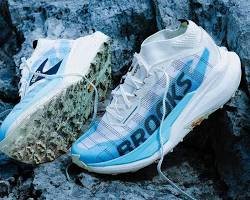
#CascaDiaGate
the arrival of the newSuper-shoeBrooks Cascadia Elite with speed propulsion plate polarizes the community.
Essential innovation or the end of purity in ultradistance?
The world of trail running is in the midst of intense controversy that has dominated social conversations over the last week.
The cause is not a career record or a new champion, but the official presentation and pre-sale of the Brooks Cascadia Elite. This new model is not a simple update; It is the massive and blatant incursion of the brand in the era of «Super-shoes» of propulsion, whose market launch is planned for March 2026.
Brooks Running presented the model to the specialized press and retailers this week, a key event that marks the start of the marketing campaign and has generated an immediate impact.
The footwear incorporates a Specialized propulsion plate, integrated into a voluminous midsole of the new DNA Gold foam. This technology, which until recently was considered exclusive to the asphalt to reduce time in the marathon, now seeks to revolutionize 100k and 100 miles.
The analysis of the elite: the doubt about the descent
The controversy has gained traction thanks to key influencers who have had early access to the prototype.
One of the most cited comments that has generated the greatest debate on Reddit and Instagram comes from Ryan «Trailrunner» Hughes, Known for his impartial technical reviews.
«The plaque in the Cascadia Elite is a blessing in the flat and uphill sections, where it acts with brutal efficiency, pushing you forward..
However, in the ultra-distance segment, the technical decline is the X-factor, and that’s where the doubt lies..
Many of us wonder if the added stiffness and height of the stack will compromise the proprioception and stability of the toe box, making the advantage climbing a dangerous risk on the UTMB or hardrock technical descents.»
This analysis highlights the fear of purists, who maintain that the use of these plates eliminates the «art» of the trail.
They claim that the stiffness of the plate and the height of the foam compromise the feeling with the terrain and the stability. In addition, there is a concern that a «performance gap» is created where only athletes with access to the most expensive Gear will be able to compete.
📜 historical context: the echo of the controversy on asphalt
The current debate on the trail accurately reflects the convulsion experienced by the asphalt running just a few years ago with the launch of the first generation of shoes with plate.
At that time, the International Athletics Federation had to intervene to establish limits on the height of the midsole and the material of the plate to preserve the fairness of the competition.
Although trail running lacks such a strict regulation on footwear (due to greater terrain variability), runners fear a similar technological climb.
The Cascadia Elite is not the first, but its notoriety and the weight of the Brooks brand make it a turning point.
The fear is that brands are forced to compete in technological innovation, leaving aside durability and safe performance in favor of pure speed. This could translate into races dominated by the Gear and not by the athlete’s inherent endurance.
Specifications of a disruptive technology
The shoe has been designed for ultra-distance competition and its technology is directly aimed at maximizing the race economy.
Its most outstanding technical characteristics, and which have been the focus of online discussions, include:
DNA Gold Midsole: The ultralight foam material with great energy return is the engine that works next to the plate. Brooks ensures that this combination significantly reduces muscle fatigue in the knee and the quadriceps in the last phase of the race, offering superior cushioning without the traditional weight.
Built-in speed plate: Unlike asphalt plates, this version is designed to be flexible in the side twist, trying to adapt to the irregularities of the trail, although this point is still the most controversial. Its main function is to act as a spring, minimizing the loss of energy in each pulse.
Instep (upper) and tactical sole: It incorporates the Matryx construction (a highly durable fabric) with an internal bootie for a competition fit. The Vibram MegaGrip Elite outsole ensures a superior grip, crucial to mitigate the risk of slipping caused by the height of the shoe.
🏁 The countdown: the premiere of 2026
The presentation of the model this week, a strategic moment to capitalize on the end of the year hype, has achieved its goal: the entire sector is talking about the Cascadia Elite.
However, the tension will continue until the general public can test it.
The formal launch of the model in stores is scheduled for March 2026.
This means that elite runners will have limited time to test and adapt this «secret weapon» before the big spring and summer appointments, such as the UTMB or the Western States, where Brooks sponsored runners are expected to put them to the test.
A turning point in the future of the trail
The launch of the Cascadia Elite is more than a marketing event; It is an inescapable turning point.
It marks the ultimate surrender of trail running to pure competition technology.
The debate about whether the Gear should be an assistant or a mere protector is over. Now, the question is no longer whether the UltraRunners will accept the super-shoe, but how quickly the records of the big tests will change in 2026 once this technology becomes widespread.
The beauty of the mountain remains the same, but the way we attack it has just become much more complex and, perhaps, faster.
🔗 OFFICIAL LINKS
- Specialized magazine (preview and technical details): Ultra Running Magazine: Trail Shoe Previews
- Product analysis (plate and upper details): UltraSignUp News: Sneak Peek at Key Trail Running Shoes Launching in 2026
- Social networks (conversation hashtag): Follow the debate using #CascadiaElite, #TrailSupershoe or #BrooksRunning on Instagram and X.
Alright peeps, what’s the verdict on winph365? Heard some buzz about it. Decent bonuses? Fair gameplay? Share your thoughts below! winph365
Was browsing and saw something about 88nn men. Anyone know what that’s about? Just curious what kind of content they put out. 88nn men
Alright, let’s see what mmwin99pro is all about. New platform, new possibilities! Fingers crossed for some beginner’s luck. mmwin99pro